Greece’s Iconic Fir Forests Face New Threat Beyond Wildfires
Greece’s iconic fir forests, long celebrated for their beauty and ecological significance, are now confronting an unprecedented threat that extends beyond the familiar peril of wildfires. While these lush forests have historically faced the dangers of fire, which have been exacerbated by climate change, a new menace looms on the horizon. This time, it is the creeping shadow of disease and pest infestation that threatens to disrupt the fragile balance of these ecosystems.
The Magnificence and Vulnerability of Greek Firs
Nestled in the mountainous regions of Greece, these fir forests are a vital part of the country’s natural heritage. Known for their dense, towering trees, these forests provide essential habitats for a wide variety of flora and fauna. The Greek fir, or Abies cephalonica, is a species endemic to the country and is predominantly found in the mountainous regions of the Peloponnese, Central Greece, and parts of the Greek islands. The ecological role of these forests is immense, as they act as carbon sinks, support biodiversity, and play a crucial role in water conservation.
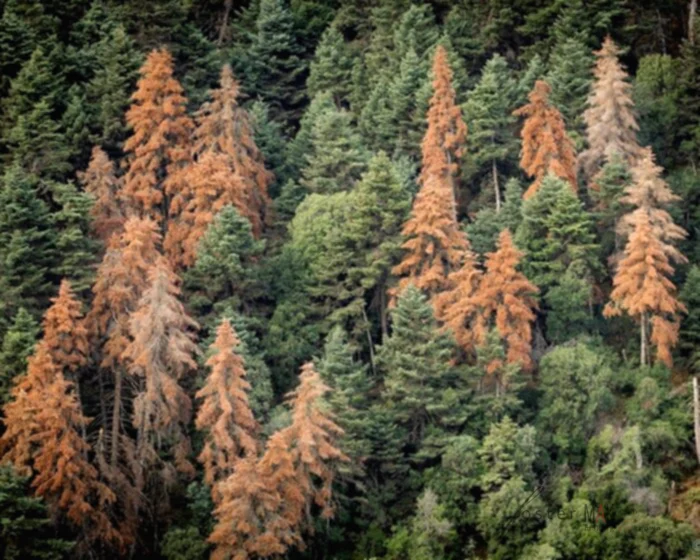
Despite their ecological importance, Greek fir forests are particularly vulnerable to external threats. Their susceptibility to climate change has increased in recent years, leading to more frequent and intense wildfires. These fires not only devastate the landscape but also leave the surviving trees more susceptible to secondary threats, such as disease and pests.
Climate Change Amplifies Existing Threats
The role of climate change in exacerbating the threats to Greece’s fir forests cannot be understated. Rising temperatures and prolonged periods of drought have created conditions that are conducive to the spread of diseases and pests. One of the most concerning diseases is the root rot fungus, which attacks the root system of the fir trees, leading to their eventual death. This fungus thrives in warmer, wetter conditions, which have become more prevalent due to climate change.
Moreover, warmer winters have failed to curb the populations of certain pests, including the bark beetle. These insects bore into the bark of trees, disrupting the flow of nutrients and ultimately killing the tree. The increased frequency and intensity of wildfires further weaken the trees, making them more vulnerable to such infestations. As a result, the combined effect of climate change and these biological threats poses a severe risk to the future of these iconic landscapes.
Greece’s Iconic Fir Forests: A Closer Look at the Ecosystem
The ecosystems of Greece’s iconic fir forests are complex and interdependent. These forests host a variety of plant species, some of which are endemic and cannot be found anywhere else in the world. The fauna includes a range of mammals, birds, and insects that rely on the fir trees for food and shelter. The health of these forests is therefore crucial not only for the trees themselves but also for the broader ecological network they support.
The decline of these forests could have cascading effects on the ecosystem. For example, the loss of fir trees can lead to soil erosion, impacting water quality in surrounding areas. Additionally, the decline in forest health may reduce the availability of habitat for wildlife, leading to a decrease in biodiversity. It is clear that the health of these forests is intrinsically linked to the overall environmental well-being of the region.
Efforts to Combat the New Threats
Recognizing the seriousness of these new threats, Greek authorities and environmental organizations have started to implement measures to protect and preserve these forests. One of the primary strategies is the monitoring and management of pest populations. This includes setting traps and using biological control methods to reduce the number of pests without harming the ecosystem.
Research is also being conducted to better understand the spread and impact of diseases like the root rot fungus. Scientists are exploring ways to enhance the resilience of the fir trees, such as developing disease-resistant strains or employing forestry techniques that promote healthier tree growth. These efforts are crucial in ensuring that the forests can withstand the pressures of climate change and biological threats.
Greece’s Iconic Fir Forests: Community Involvement and Education
Community involvement is another critical aspect of the conservation efforts. Local communities living near the fir forests are being educated about the importance of these ecosystems and the threats they face. Awareness campaigns aim to inform residents about how they can contribute to conservation efforts, such as by participating in reforestation projects or supporting sustainable land management practices.
Educational programs are also being developed for schools to teach the younger generation about the value of these natural resources. By fostering a sense of stewardship among the youth, conservationists hope to ensure the long-term protection of these forests.
Challenges in Preserving Greece’s Natural Heritage
Despite the ongoing efforts to protect these iconic landscapes, significant challenges remain. Limited financial resources and competing land use priorities pose obstacles to comprehensive conservation strategies. Additionally, the unpredictable nature of climate change means that new threats could emerge that are not yet fully understood or anticipated.
The international community has a role to play in supporting Greece’s conservation efforts. Collaborative research initiatives and funding for conservation projects can provide much-needed support for these endeavors. Furthermore, global efforts to combat climate change are crucial in mitigating the broader environmental factors that threaten these forests.
The Future of Greece’s Iconic Fir Forests
The future of Greece’s iconic fir forests hangs in the balance. While the threats they face are formidable, the concerted efforts of scientists, conservationists, and local communities offer hope for their preservation. Protecting these forests is not just about safeguarding a national treasure; it is about preserving a vital part of the planet’s ecological heritage.
As the world continues to grapple with the effects of climate change and environmental degradation, the story of Greece’s fir forests serves as a reminder of the challenges and opportunities that lie ahead in the quest to protect our natural world. It is a call to action for all who value the beauty and diversity of our planet’s ecosystems.