
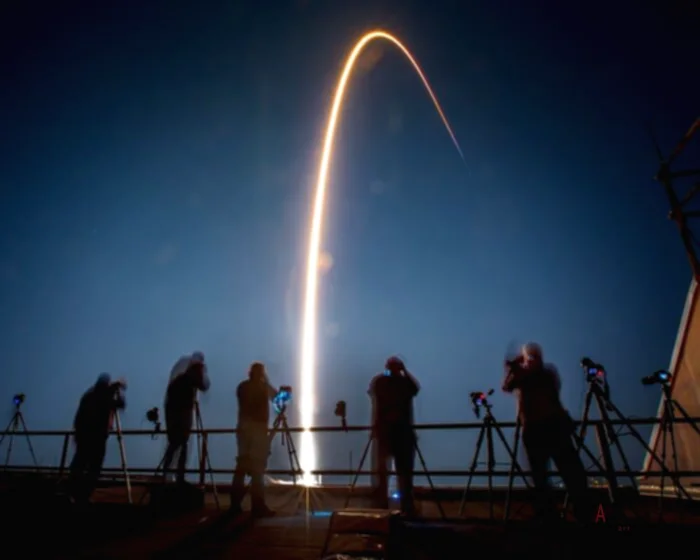
New Space Race Risks Old Politics on the Moon
The new space race is heating up, with countries and private companies vying for a slice of the lunar pie. This modern competition echoes the Cold War-era rivalry that saw the United States and the Soviet Union battle for supremacy beyond Earth’s atmosphere. However, this time, the stakes are higher and the players more numerous, bringing with them a complex web of geopolitical interests and potential conflicts. As nations and corporations alike set their sights on the Moon, questions about ownership rights, international cooperation, and the militarization of space are becoming ever more pressing.
Moon as the New Frontier
The Moon is rapidly becoming the focal point of the new space race. Unlike the previous era, which was primarily about demonstrating technological prowess and ideological superiority, today’s race is driven by tangible economic and scientific interests. The Moon’s surface is rich in resources such as water ice and rare earth elements, which could be pivotal for future space exploration and even Earth’s industries. Water ice, in particular, is seen as a critical resource for sustaining human life in space and potentially producing rocket fuel.
China, the United States, Russia, and the European Union have all laid out ambitious plans for lunar exploration and exploitation. China’s Chang’e program has already achieved significant milestones, including the first landing on the far side of the Moon. Meanwhile, NASA’s Artemis program aims to return humans to the Moon by the mid-2020s, with the long-term goal of establishing a sustainable human presence. These efforts are part of a broader strategy to use the Moon as a stepping stone for further exploration of Mars and beyond.
International Agreements Under Strain
The renewed interest in lunar exploration is putting strain on existing international agreements that govern outer space activities. The 1967 Outer Space Treaty, signed by over 100 countries, including all the major space-faring nations, forms the backbone of space law. It designates outer space, including the Moon, as the
province of all mankind
and prohibits the placement of nuclear weapons or other weapons of mass destruction in space.
However, the treaty is silent on the commercial exploitation of space resources. This legal grey area has led to differing interpretations and the creation of new national laws aimed at securing a competitive edge. The United States, for instance, enacted the Commercial Space Launch Competitiveness Act in 2015, which grants American companies the right to own and sell resources extracted from celestial bodies. This move has been met with criticism by some countries, who argue that it violates the spirit of international cooperation.
Private Sector in the New Space Race
The emergence of private companies as major players is another defining feature of the new space race. Companies like SpaceX, Blue Origin, and Astrobotic are investing heavily in technologies that could make lunar travel more accessible and affordable. SpaceX, led by Elon Musk, has already begun transporting cargo and astronauts to the International Space Station and is developing the Starship spacecraft for future lunar missions.
These companies are not just interested in exploration for exploration’s sake. They see the Moon as a potential hub for commercial activities, from mining to tourism. Their involvement raises questions about governance and accountability in space. While private enterprises can accelerate technological advancement and reduce costs, their profit-driven motives may clash with the broader interests of humanity and the environment.
Old Politics on the Moon
As the new space race gains momentum, there is a growing concern that it could reignite old political tensions on the Moon. The competition between the United States and China, in particular, carries echoes of the Cold War, with both nations seeking to assert their dominance. In recent years, China has made significant strides in its space program, prompting the United States to ramp up its efforts to maintain leadership.
This geopolitical rivalry extends to the realm of military strategy. The Moon’s strategic importance is not lost on military planners, who recognize its potential as a platform for surveillance and communication. Both the United States and China have established space forces within their military structures, signaling a shift towards the militarization of space. This development raises the specter of an arms race in space, with potentially destabilizing consequences for global security.
Challenges of Cooperation
Despite these tensions, there are also efforts to foster international cooperation in space exploration. The Artemis Accords, an initiative led by the United States, seeks to establish a framework for the peaceful and responsible exploration of the Moon. The accords have been signed by several countries, including close allies like Japan and the United Kingdom. They emphasize transparency, interoperability, and the sharing of scientific data.
However, key players like China and Russia have not signed the accords, underscoring the challenges of achieving a truly global consensus. Some critics argue that the accords are an attempt by the United States to set the rules of lunar exploration unilaterally. They advocate for a more inclusive approach that involves all space-faring nations and respects the principles of the Outer Space Treaty.
The Role of Technology in the New Space Race
Technological innovation is at the heart of the new space race. Advances in rocket technology, robotics, and artificial intelligence are enabling more ambitious missions and reducing the cost of space exploration. Reusable rockets, pioneered by SpaceX, have revolutionized the industry by significantly lowering the cost of launching payloads into space. This has opened up new possibilities for both government and private missions to the Moon.
Robotic missions are also playing a crucial role in paving the way for human exploration. Autonomous rovers and landers are being used to map the lunar surface, search for resources, and assess potential landing sites. These technologies are essential for reducing the risks associated with human missions and ensuring their success.
Sustainable Exploration and Environmental Concerns
As nations and companies gear up for lunar exploration, there is a growing awareness of the need for sustainable practices. The Moon’s fragile environment could be easily disrupted by human activities, leading to long-term consequences for scientific research and preservation. Dust, in particular, poses a significant challenge, as it can damage equipment and pose health risks to astronauts.
Efforts are underway to develop technologies and strategies that minimize the environmental impact of lunar activities. This includes designing landers and rovers that produce less dust, as well as developing guidelines for waste management and resource extraction. These efforts are crucial for ensuring that the exploration of the Moon is conducted in a responsible and sustainable manner.
Looking Beyond the Moon
While the Moon is the current focus of the new space race, it is also seen as a stepping stone for further exploration of the solar system. Mars, in particular, is the next frontier, with both NASA and SpaceX planning missions to the Red Planet in the coming decades. The Moon could serve as a proving ground for technologies and strategies that will be used on Mars, such as habitat construction and resource utilization.
The new space race is not just about exploration and competition. It is also an opportunity to advance scientific knowledge and inspire future generations. The discoveries made on the Moon and beyond could have profound implications for our understanding of the universe and our place in it.