
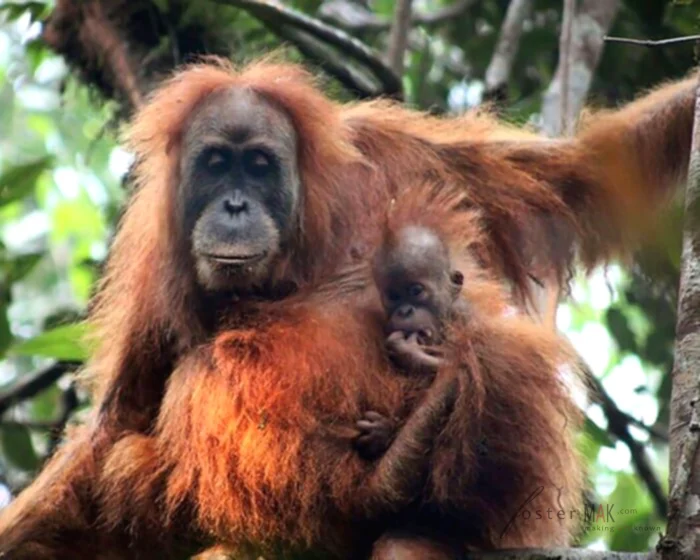
Indonesia Floods An Extinction Level Crisis for Worlds Rarest Ape
In the lush, verdant forests of Sumatra, a unique primate population is facing an unprecedented threat. The recent floods in Indonesia have been described as an
extinction level
disturbance for the world’s rarest ape, the Tapanuli orangutan. This critically endangered species, which resides exclusively in the Batang Toru ecosystem, is now at the forefront of a conservation crisis as relentless rainfall and subsequent flooding have devastated its already fragile habitat.
A Perfect Storm: How Natural Disasters Exacerbate Conservation Challenges
The Tapanuli orangutan was only identified as a distinct species in 2017, making it the most recently discovered and also the most endangered great ape in the world. With an estimated population of fewer than 800 individuals, this species is uniquely vulnerable. The recent flooding in Sumatra has compounded their plight, as widespread deforestation and human encroachment have already fragmented their habitat.
The heavy rains, which experts attribute to climate change, have led to severe flooding in Indonesia’s Sumatra region. Rivers have burst their banks, and landslides have swept through the dense forests, destroying the homes of both humans and wildlife. For the Tapanuli orangutan, whose survival hinges on the preservation of its forest habitat, such natural disasters pose an existential threat.
Human Impact: Development and Deforestation
Indonesia’s rapid development has been a double-edged sword. While it has spurred economic growth, it has also driven significant environmental degradation. Large-scale deforestation for agriculture, mining, and infrastructure projects has significantly reduced the orangutan’s habitat. In particular, the Batang Toru ecosystem has been under constant threat from a hydropower project that has sparked international controversy.
The development of the Batang Toru hydropower plant has been criticized by conservationists for its potential to destroy crucial habitat for the Tapanuli orangutan. Despite assurances from developers that the project will be environmentally friendly, the deforestation required for construction poses a direct threat to the fragile ecosystem. The recent floods have exacerbated these concerns, as they highlight the vulnerability of the region to natural disasters that are intensified by human activity.
An Extinction Level Disturbance for World’s Rarest Ape
As the floods continue to ravage the region, the future of the Tapanuli orangutan hangs in the balance. Conservationists warn that this
extinction level
disturbance for the world’s rarest ape could lead to a rapid decline in their already dwindling numbers. The floods have severely disrupted their habitat, making it difficult for the orangutans to find food and shelter.
The destruction of trees and vegetation not only strips the orangutans of their homes but also affects the entire ecosystem. The loss of biodiversity impacts other species that share the habitat, creating a cascading effect that threatens the ecological balance. For the Tapanuli orangutan, whose existence is intricately tied to the health of the forest, the consequences could be dire.
International Attention: A Call for Global Action
The plight of the Tapanuli orangutan has garnered international attention, with conservation organizations around the world calling for urgent action. The floods have served as a wake-up call, highlighting the need for immediate measures to protect the remaining habitat of this critically endangered species.
Environmental groups are urging the Indonesian government to halt further development in the Batang Toru ecosystem and to implement stricter regulations on deforestation. There is also a push for increased funding and resources for conservation efforts, including the establishment of wildlife corridors and the restoration of damaged habitats.
Community Involvement: Local Efforts to Save a Species
While international support is crucial, local communities play a vital role in conservation efforts. Many villagers in the Batang Toru region rely on the forest for their livelihoods, and they have been directly impacted by the floods. Community-led initiatives have emerged as a powerful tool in the fight to save the Tapanuli orangutan.
Local conservation programs focus on sustainable practices that benefit both the human and animal inhabitants of the forest. Education and awareness campaigns are helping to foster a culture of conservation, encouraging communities to protect their natural resources. By working together, local residents and conservationists are striving to create a future where both people and orangutans can thrive.
An Urgent Need for Sustainable Solutions
The recent floods in Indonesia underscore the urgent need for sustainable solutions to address the complex challenges facing the Tapanuli orangutan. As climate change continues to increase the frequency and intensity of natural disasters, it is imperative that conservation strategies adapt to these new realities.
Conservationists emphasize the importance of integrating climate resilience into conservation planning. This includes protecting and restoring natural buffers such as wetlands and forests that can mitigate the impact of floods and other climate-related events. By building resilience into conservation efforts, it is possible to safeguard the future of the Tapanuli orangutan and the rich biodiversity of the Batang Toru ecosystem.
The Role of Technology: Innovative Approaches to Conservation
Technology is playing an increasingly important role in conservation efforts. From satellite imagery to drones, innovative tools are being used to monitor the health of the Batang Toru ecosystem and track the movements of its inhabitants. These technologies provide valuable data that can inform conservation strategies and help identify areas most in need of protection.
Remote sensing technology allows conservationists to assess the impact of the floods and to prioritize areas for restoration. Drones equipped with cameras can capture real-time footage of the forest, providing insights into the behavior and habitat use of the Tapanuli orangutan. By harnessing the power of technology, conservationists are better equipped to respond to crises and implement effective solutions.
A Critical Juncture for Conservation
The situation facing the Tapanuli orangutan is a stark reminder of the delicate balance between development and conservation. As the world’s rarest ape fights for survival in the wake of devastating floods, the international community is being called upon to take decisive action. The future of this unique species depends on a collective effort to protect its habitat and to address the root causes of environmental degradation.
The Tapanuli orangutan stands at a critical juncture, and the choices made today will determine its fate. By prioritizing sustainable development and conservation, it is possible to ensure that future generations will have the opportunity to witness the beauty and wonder of this remarkable species.