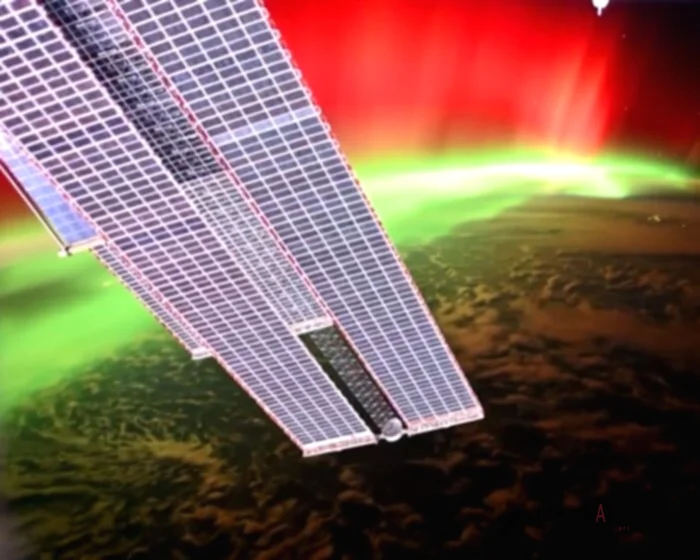
Stunning Aurora Captured from Space by Russian Cosmonaut
In a breathtaking display of nature’s beauty and scientific achievement, a Russian cosmonaut has captured stunning images of an aurora from space. The extraordinary photographs, taken aboard the International Space Station (ISS), offer a unique perspective on this natural phenomenon, providing both aesthetic enjoyment and scientific data for researchers around the world. The spectacular aurora captured from space has captivated audiences and shed light on the dynamic interactions between Earth’s atmosphere and the solar wind.
Unveiling the Celestial Spectacle
The aurora, a natural light display predominantly seen in high-latitude regions around the Arctic and Antarctic, is caused by the interaction between charged particles from the sun and the Earth’s magnetic field. When these particles collide with gases like oxygen and nitrogen in Earth’s atmosphere, they emit light, creating vibrant displays of color that can include greens, reds, purples, and blues. Capturing this phenomenon from space offers a vantage point that reveals the full expanse of these luminous curtains dancing across the planet’s atmosphere.
Russian cosmonaut Sergey Kud-Sverchkov, currently stationed aboard the ISS, managed to photograph this awe-inspiring spectacle during a recent orbit. His images have been widely shared on social media and praised for their vivid detail and clarity. These photos provide a rare opportunity to observe the aurora from a perspective that is otherwise impossible from the ground.
Aurora Captured from Space: A Visual Feast
The images captured by Kud-Sverchkov reveal the aurora as a vibrant, swirling mass of color stretching across the curvature of the Earth. This celestial display appears as an ethereal green and red glow, contrasting beautifully against the blackness of space. From his unique vantage point 400 kilometers above the planet’s surface, the cosmonaut’s lens captures the vastness and complexity of the aurora in a way that ground-based observers could only imagine.
The photographs underscore the scale of the aurora, showing how these light displays can extend for thousands of kilometers. The images also highlight the dynamic nature of the aurora, with varying intensities and patterns that shift and change as the ISS orbits the Earth. This visual feast is not only a treat for the eyes but also a reminder of the powerful forces at work in the universe.
Scientific Insights from Space
Beyond their aesthetic appeal, these images provide valuable scientific insights. By studying auroras, scientists can gain a better understanding of space weather and its impact on Earth’s atmosphere. The interactions that produce auroras are also relevant to understanding the broader dynamics of Earth’s magnetic field and its interaction with solar winds.
The data collected from these space-based observations can help improve models that predict space weather events. Such events can have significant impacts on satellite operations, communications systems, and even power grids on Earth. By understanding the conditions that lead to auroras, researchers can better prepare for potential disruptions caused by solar activity.
The Significance of International Collaboration
The capture of the aurora from space also highlights the importance of international collaboration in space exploration. The ISS is a joint project involving space agencies from the United States, Russia, Europe, Japan, and Canada. This cooperative effort allows for the sharing of resources, knowledge, and expertise to advance our understanding of the universe.
The images taken by Kud-Sverchkov are just one example of the valuable contributions made by astronauts and cosmonauts from around the world. Through their efforts, humanity gains new perspectives on our planet and the cosmos beyond. The spirit of cooperation that drives the ISS program ensures that discoveries like these benefit all of humanity.
Aurora Captured from Space: A Milestone in Space Photography
Space photography has come a long way since the early days of space exploration. The ability to capture high-resolution images from orbit has revolutionized our understanding of Earth and its place in the universe. The aurora captured from space by Kud-Sverchkov represents a significant milestone in this field, showcasing the capabilities of modern imaging technology and the artistic sensibilities of astronauts.
These images serve as a testament to the power of technology to capture the beauty of our world in unprecedented detail. They remind us of the importance of preserving our planet and its delicate balance, as seen from the unique vantage point of space.
Public Fascination and Inspiration
The public’s fascination with the aurora is not merely scientific; it is deeply emotional and inspirational. Images like those captured by Kud-Sverchkov invite us to look beyond our everyday lives and contemplate the wonders of the natural world. They inspire a sense of awe and curiosity about the universe and our place within it.
For many, the sight of an aurora is a once-in-a-lifetime experience, often prompting travel to northern or southern latitudes to witness it firsthand. The ability to see this phenomenon from space allows people around the globe to share in the experience and appreciate the beauty of our planet from a different perspective.
Technological Advancements in Space Imaging
The successful capture of the aurora from space is also a testament to the technological advancements in space imaging. The cameras and equipment used by modern astronauts are capable of capturing images with remarkable clarity and detail. These tools not only document the beauty of space but also serve as critical instruments for scientific research.
Advancements in technology have made it possible to capture images in different wavelengths of light, providing researchers with more information about the composition and behavior of the aurora. This capability is crucial for understanding the complex interactions between the solar wind and Earth’s magnetic field.
Looking Ahead: The Future of Space Exploration
As space exploration continues to advance, the ability to capture and study phenomena like the aurora from space will only improve. Future missions to the Moon, Mars, and beyond will undoubtedly yield new insights and images that will further our understanding of the universe.
The ongoing work of astronauts and cosmonauts aboard the ISS and other space missions ensures that we continue to expand our knowledge and appreciation of the cosmos. Their efforts contribute to a growing body of knowledge that will inform future generations and inspire continued exploration of the final frontier.
The stunning aurora captured from space by Russian cosmonaut Sergey Kud-Sverchkov is a reminder of the beauty and complexity of our universe. Through the lens of a camera, we are offered a glimpse into the cosmic ballet that plays out above our heads, a dance of light and energy that has captivated humanity for centuries.