
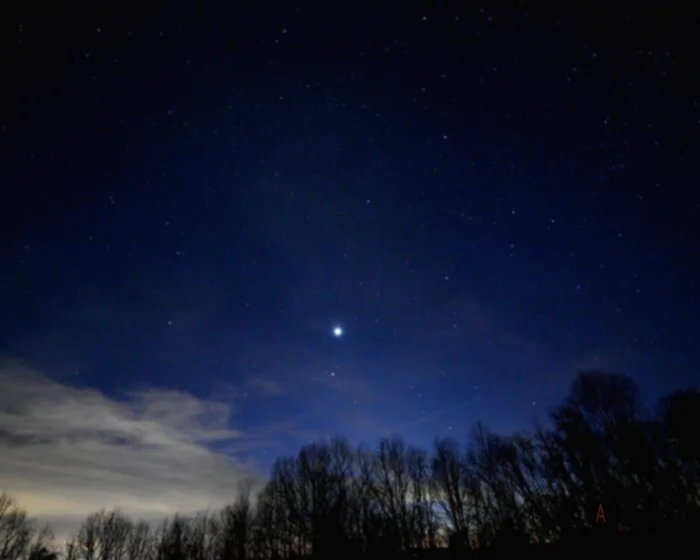
Februarys Planetary Parade Witness Six Planets Align
In a spectacular celestial event, stargazers around the world are preparing to witness a rare planetary parade in February. This astronomical phenomenon will see six planets align in the night sky, offering a breathtaking view for both amateur astronomers and seasoned skywatchers. Such alignments are infrequent, making this event a must-see for anyone with an interest in the cosmos.
A Celestial Spectacle Like No Other
Astronomers have been eagerly anticipating the planetary parade in February, as it will feature Mercury, Venus, Mars, Jupiter, Saturn, and Uranus. These planets will appear to line up in the sky, creating a stunning visual display. The alignment is not only a treat for the eyes but also provides an excellent opportunity for scientific observation and study. Each of these planets will be visible to the naked eye or with the aid of a small telescope, depending on the observer’s location and light conditions.
This celestial event is particularly special because it allows people to see multiple planets in a single evening. Typically spread out across the sky, these planets will now appear in a relatively straight line, enhancing the overall visual impact. The alignment will be visible shortly after sunset, with the best viewing times occurring in the early evening hours.
Preparing for the Planetary Parade in February
For those interested in witnessing the planetary parade in February, preparation is key. To fully enjoy this cosmic event, individuals should find a location with minimal light pollution, such as a rural area or a designated dark-sky park. These locations offer the best conditions for stargazing, as they allow for clearer and more detailed views of celestial objects.
Understanding the movement and position of each planet can also enhance the viewing experience. Mercury, the closest planet to the sun, will be the most challenging to spot, as it will be low on the horizon. Venus, often referred to as the
evening star,
will shine brightly, making it relatively easy to locate. Mars will appear with its distinctive reddish hue, while Jupiter and Saturn will stand out due to their size and brightness. Uranus, although more difficult to see, will be positioned between Mars and Jupiter, requiring a telescope for optimal viewing.
The Science Behind Planetary Alignments
The occurrence of a planetary parade in February is a result of the unique orbital paths of the planets in our solar system. Each planet orbits the sun at a different speed and distance, and their varying paths occasionally lead to alignments from Earth’s perspective. However, it is important to note that the planets do not actually line up in space; rather, they appear to do so from our vantage point.
These alignments, also known as syzygies, have intrigued astronomers for centuries. They provide valuable opportunities for scientific research, as astronomers can study the gravitational interactions between the planets and their effects on each other. Additionally, such events can offer insights into the dynamics of our solar system and the forces that govern planetary motion.
Cultural and Historical Significance
Planetary alignments have held cultural and historical significance throughout human history. Many ancient civilizations, including the Maya and the Babylonians, observed and recorded these events, often attributing them to divine or supernatural forces. In some cultures, planetary alignments were believed to herald significant changes or mark important events.
Today, while we understand the scientific explanations behind these occurrences, they continue to captivate the imagination and inspire wonder. The planetary parade in February is no exception, as it offers a reminder of the vastness and beauty of the universe.
Capturing the Moment: Tips for Stargazers
For those aiming to capture the planetary parade in February on camera, there are several tips to consider. Using a tripod will help stabilize the camera and reduce blurriness, especially during long exposure shots. A wide-angle lens can capture the entire alignment, while a zoom lens allows for detailed shots of individual planets. Experimenting with different settings and exposure times can yield the best results.
Stargazers should also consider using apps or star maps to assist in locating the planets and identifying constellations in the vicinity. These tools can enhance the overall experience by providing context and helping observers track the movement of celestial bodies across the sky.
Looking Ahead: Future Astronomical Events
While the planetary parade in February promises to be a highlight of the astronomical calendar, there are more celestial events to look forward to in the coming months. Comets, meteor showers, and eclipses offer additional opportunities for skywatchers to engage with the wonders of the universe. Keeping an eye on astronomical forecasts and staying informed about upcoming events can ensure that no cosmic spectacle is missed.
In conclusion, the planetary parade in February is set to be a dazzling display of cosmic alignment, providing a rare opportunity for both observation and appreciation of our solar system. As the planets take center stage in this celestial ballet, they remind us of the intricate and ever-changing dance of the cosmos.