
Discover Anlife An Unusual Evolution Simulators AI Insights
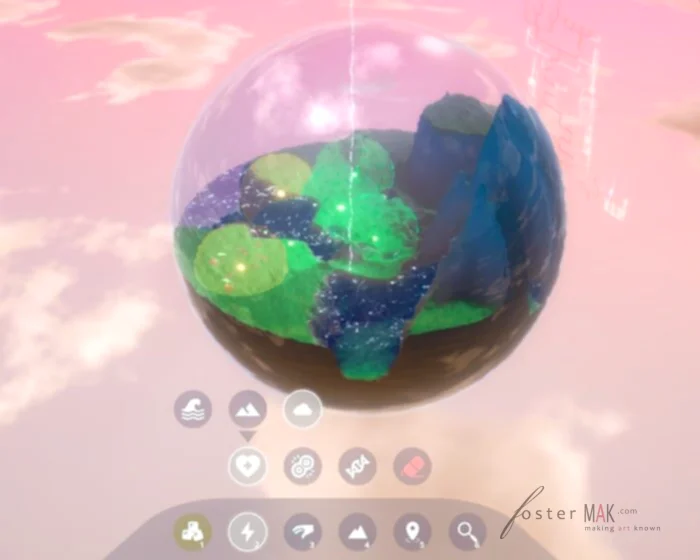
In the ever-evolving world of artificial intelligence and simulation technology, Anlife has emerged as an intriguing player, presenting what many are calling an unusual evolution simulator. This innovative platform has captivated the imaginations of scientists, researchers, and enthusiasts worldwide by offering a unique glimpse into the processes of evolution and adaptation in a digital environment. By simulating lifelike conditions and evolutionary pressures, Anlife provides valuable insights into the complexities of life and evolution in a controlled, observable setting.
An Unusual Evolution Simulator Captures Attention
Designed to mimic the intricate mechanisms of natural selection and survival, Anlife stands out from traditional simulators through its sophisticated algorithms and adaptive environments. Unlike conventional simulations that often rely on pre-programmed outcomes, Anlife creates an open-ended system where digital organisms can evolve in unexpected ways. This open-ended approach allows for a true exploration of the unpredictability and diversity inherent in natural evolution.
The simulator operates by creating digital life forms that must navigate their environment to survive and reproduce. These life forms are subject to various evolutionary pressures, such as competition for resources, environmental hazards, and predation. As these digital organisms adapt to their surroundings, they exhibit behaviors and traits that can be studied to gain a deeper understanding of real-world evolutionary processes.
Behind the Scenes of Anlife’s Development
The development of Anlife was spearheaded by a team of dedicated scientists and engineers who sought to push the boundaries of what is possible in digital simulations. By integrating advanced AI technologies and machine learning algorithms, the developers created a platform that not only simulates evolution but also learns from it. This iterative process allows the simulator to become more refined over time, mirroring the very evolution it seeks to study.
To create a realistic simulation, the development team incorporated a wide range of variables that influence evolution. These variables include genetic mutations, environmental changes, and interactions with other organisms. By adjusting these parameters, researchers can observe how different factors impact the evolution of digital life forms, providing valuable data that can be applied to fields such as biology, ecology, and even robotics.
The Science of Simulating Life
At its core, Anlife is built on the principles of evolutionary biology. By simulating the fundamental processes of mutation, selection, and inheritance, the platform offers a unique perspective on how life evolves over time. Researchers can manipulate various aspects of the simulation to test specific hypotheses or observe the outcomes of different evolutionary scenarios.
One of the most fascinating aspects of Anlife is its ability to produce emergent behaviors that resemble those found in nature. For example, digital organisms may develop complex social structures, cooperative behaviors, or even rudimentary communication methods. These emergent phenomena provide researchers with a wealth of information about the potential pathways of evolution and the factors that drive the development of complex life forms.
Real-World Applications and Implications
Anlife’s unusual evolution simulator is not just a theoretical exercise; it has practical applications that extend beyond the realm of academia. In the field of medicine, for example, researchers are using the platform to study the evolution of viruses and bacteria, offering insights into how these pathogens may adapt to treatments or develop resistance to drugs. This knowledge is crucial for the development of effective strategies to combat infectious diseases.
In the world of robotics, Anlife’s simulations are helping engineers design more adaptive and resilient machines. By understanding how digital organisms evolve to overcome challenges, researchers can apply these principles to create robots that are better equipped to handle unpredictable environments. This could lead to advancements in autonomous vehicles, search-and-rescue operations, and space exploration.
Engaging the Public with Evolutionary Concepts
Beyond its scientific applications, Anlife serves as an educational tool that engages the public in the wonders of evolution. By providing an interactive platform where users can experiment with different evolutionary scenarios, Anlife helps to demystify complex biological concepts and make them accessible to a broader audience. This hands-on approach encourages curiosity and fosters a deeper appreciation for the natural world.
Educational institutions are incorporating Anlife into their curricula, using it as a dynamic teaching aid to illustrate the principles of evolution and adaptation. Students can observe the impact of various evolutionary pressures in real time, gaining a firsthand understanding of how life on Earth has evolved over millions of years.
Challenges and Future Directions
Despite its groundbreaking achievements, Anlife faces several challenges that its developers are keen to address. One of the primary obstacles is the computational power required to run complex simulations. As the platform continues to grow and evolve, ensuring that it remains accessible and efficient is a top priority for the team.
Looking ahead, the developers of Anlife are exploring new ways to expand the simulator’s capabilities. This includes incorporating more sophisticated models of environmental interactions and enhancing the genetic complexity of digital organisms. By doing so, they aim to create an even more accurate representation of evolutionary processes, further bridging the gap between digital simulations and real-world biology.
A New Frontier in Evolutionary Research
Anlife’s unusual evolution simulator represents a new frontier in the study of evolution and adaptation. By creating a platform that mirrors the complexity and unpredictability of natural selection, Anlife offers researchers a powerful tool to explore the mysteries of life in a controlled setting. As the platform continues to evolve, it holds the potential to unlock new insights into the mechanisms that drive evolution and shape the diversity of life on our planet.