Photographer Tackled by ICE A Battle for Press Freedom
In a startling incident raising concerns over press freedom and the treatment of journalists, a photographer tackled by ICE agents has become a focal point in the ongoing debate about the rights of the press and the conduct of immigration enforcement agencies. The incident occurred during a routine assignment, transforming into a dramatic confrontation that has drawn national attention and prompted calls for accountability and policy review.
The Incident That Sparked Outrage
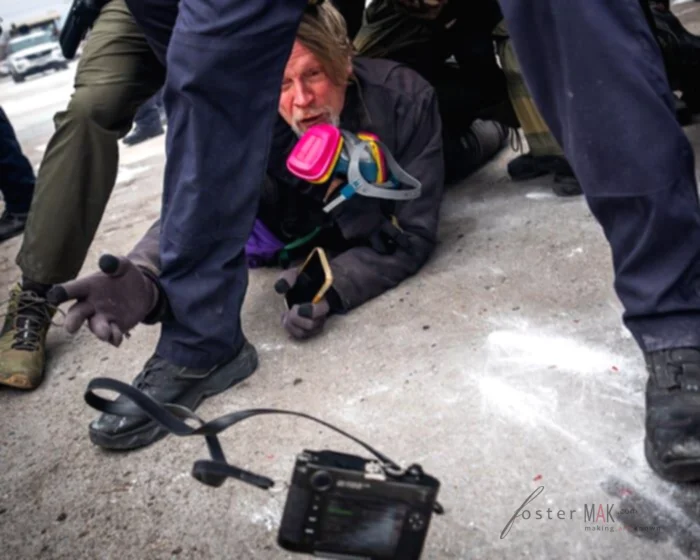
The altercation took place at a public event in Southern California, where a group of journalists had gathered to cover a protest outside a detention center. The photographer, identified as Javier Hernandez, was documenting the event for a local newspaper when the confrontation occurred. According to eyewitnesses, Hernandez was capturing images of demonstrators and the increased security presence when Immigration and Customs Enforcement agents unexpectedly approached him.
Details of the events leading up to Hernandez’s detainment remain murky. Reports suggest that Hernandez was following the standard procedure for journalists covering protests by maintaining a safe distance and clearly displaying his press credentials. However, ICE agents allegedly claimed he was interfering with their operations. The situation rapidly escalated, resulting in Hernandez being tackled to the ground, handcuffed, and temporarily detained. The incident was captured by nearby reporters and quickly circulated on social media, igniting widespread criticism.
Legal and Ethical Implications
The incident involving the photographer tackled by ICE has reignited debates around the legal protections afforded to journalists under the First Amendment. Legal experts argue that the right to document public events is a fundamental aspect of press freedom, and any infringement upon this right is a potential violation of constitutional protections. Hernandez’s case is seen as a critical test of these principles, with media organizations and civil rights advocates closely monitoring the developments.
The National Press Photographers Association (NPPA) has condemned the actions of the ICE agents, emphasizing the importance of allowing journalists to perform their duties without fear of intimidation or violence. In a formal statement, the NPPA called for a thorough investigation into the incident and urged ICE to review its policies regarding interactions with the press. The organization also highlighted the need for better training of law enforcement personnel to understand the role of the media and respect their rights.
The Photographer’s Perspective
Javier Hernandez, the photographer tackled by ICE, has expressed his disbelief and frustration over the incident. In interviews following his release, Hernandez described the experience as both physically and emotionally taxing. He recounted how he repeatedly identified himself as a member of the press, yet his pleas were ignored. Hernandez’s account underscores the challenges journalists face in high-tension environments where their presence can be misinterpreted as interference.
Hernandez has received an outpouring of support from fellow journalists and advocacy groups, many of whom have rallied to his defense and called for systemic changes to prevent similar incidents in the future. The photographer has vowed to pursue legal action against ICE, arguing that the unjustified use of force against him constitutes a breach of his constitutional rights. His case is expected to highlight the need for clearer guidelines on how law enforcement agencies should interact with the press in the line of duty.
ICE’s Response to the Controversy
In response to the growing backlash, ICE issued a statement defending its agents’ actions, claiming they were responding to a perceived threat during a volatile situation. The agency maintains that its personnel acted within the scope of their authority and followed protocol in addressing what they described as a security concern. However, ICE has acknowledged the need for a review of the incident to ensure compliance with established procedures and respect for press freedoms.
The agency’s response has done little to quell the criticism it faces, with many arguing that the explanation falls short of addressing the core issue of press safety and freedom. Critics have called for increased transparency and accountability within ICE, demanding that the agency take concrete steps to prevent future occurrences of excessive force against journalists.
Broader Implications for Press Freedom
The episode of the photographer tackled by ICE has broader implications for the state of press freedom in the United States. It highlights the precarious position of journalists who find themselves navigating increasingly hostile environments while attempting to fulfill their professional responsibilities. The incident raises questions about the balance between national security and the public’s right to know, as well as the extent to which law enforcement agencies should be held accountable for their interactions with the media.
Media advocacy groups warn that incidents like these have a chilling effect on journalism, potentially deterring reporters from covering contentious events due to fear of reprisal. They argue that a free and independent press is essential for a functioning democracy and that any actions undermining this freedom must be vigorously challenged.
Community and Media Reactions
The incident has sparked a wave of solidarity within the journalism community, with numerous organizations and individuals expressing support for Hernandez and condemning the actions of ICE. A series of protests and vigils have been organized in major cities across the country to draw attention to the issue and demand justice for Hernandez. These events have served as a rallying point for those advocating for stronger protections for journalists and greater accountability from law enforcement agencies.
The media’s coverage of the incident has played a crucial role in shaping public opinion and bringing attention to the challenges faced by journalists. News outlets have used the incident as an opportunity to reflect on the importance of press freedom and the need for vigilance in protecting this fundamental right. The widespread dissemination of information about the incident has reinforced the power of the media to hold institutions accountable and advocate for change.
The Path Forward for Press and Policy
As the legal proceedings and investigations unfold, the case of the photographer tackled by ICE is expected to serve as a catalyst for discussions about press freedom and law enforcement practices. Advocates are calling for legislative reforms to strengthen protections for journalists and ensure that their rights are upheld in all circumstances. There is also a push for increased training and awareness programs for law enforcement personnel to prevent misunderstandings and conflicts with the press.
The incident has underscored the need for a collaborative approach to addressing the challenges faced by journalists, with media organizations, legal experts, and policymakers working together to craft solutions that safeguard press freedom while maintaining public safety. The outcome of this case could set important precedents for how similar situations are handled in the future, influencing the relationship between the press and law enforcement agencies nationwide.