
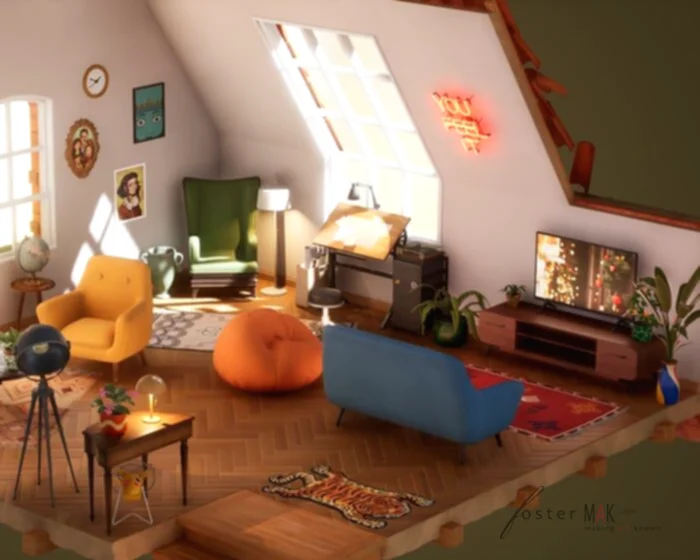
Exploring Cosy Gaming A New Home Ownership Substitute?
In recent years, the concept of cosy gaming has emerged as a captivating trend that intertwines with the growing challenges of home ownership. As real estate prices soar and economic uncertainties prevail, many are turning to alternative forms of comfort and escapism. Cosy gaming and home ownership are increasingly being discussed in the same breath as the former provides a sanctuary for those who find the latter increasingly out of reach. This article delves into how cosy gaming offers a unique reprieve from the demanding realities of home ownership.
The Rise of Cosy Gaming
Cosy gaming, a subgenre of video games known for their relaxing and non-competitive nature, has become a cultural phenomenon. Games such as Animal Crossing, Stardew Valley, and The Sims have drawn millions of players worldwide, offering a digital escape into serene environments. These games emphasize creativity, exploration, and community building without the stress of time constraints or adversaries. The appeal lies in their ability to provide a sense of accomplishment and peace, resonating particularly with those who face the pressures of modern life.
The rise of cosy gaming can be attributed to several factors. Firstly, the global pandemic forced many to stay indoors, seeking solace in virtual worlds where they could interact and create without restrictions. Secondly, the increasing complexity and demands of daily life have turned many towards entertainment that offers relaxation rather than competition. Lastly, the affordability of video games compared to the soaring costs of home ownership makes cosy gaming an attractive alternative for many.
Cosy Gaming and Home Ownership
The juxtaposition of cosy gaming and home ownership reflects a broader societal trend. As home ownership becomes a distant dream for many, the digital world offers an accessible form of ownership and creativity. In games like Animal Crossing, players can design their virtual homes, cultivate gardens, and build communities, fulfilling desires that may be unattainable in real life due to financial constraints.
The dream of owning a home is one that is deeply embedded in many cultures, symbolizing stability, success, and security. However, with rising real estate prices and stagnant wages, this dream is becoming increasingly elusive for younger generations. In contrast, cosy gaming provides an avenue to express creativity and achieve a sense of ownership without the financial burden. Players invest time and effort into building their virtual spaces, experiencing a degree of satisfaction and control that real-world constraints often deny.
The Psychological Comfort of Virtual Spaces
At the heart of the cosy gaming phenomenon is its ability to provide psychological comfort. The digital environments created in these games are designed to be welcoming and stress-free. This aspect is particularly appealing in today’s fast-paced world, where mental health concerns are at the forefront. By engaging in cosy gaming, individuals find a safe space to unwind and recharge, which can be therapeutic.
Moreover, the community aspect of these games fosters a sense of belonging. Players can connect with others, share experiences, and collaborate on projects, creating a virtual neighborhood that mirrors the communal aspects of home ownership. This social interaction adds a layer of depth to the gaming experience, making it a substitute for the social benefits traditionally associated with owning a home.
Economic Realities and Gaming as Escapism
The economic realities of contemporary life have forced many to reconsider traditional pathways to success and happiness. Home ownership, once a cornerstone of the
American Dream,
is now overshadowed by student debt, high living costs, and uncertain job markets. In this context, cosy gaming emerges as a form of escapism that is both affordable and fulfilling.
For those unable to invest in real estate, investing in a gaming console or a PC becomes a viable alternative. The initial cost is significantly lower, and the return on investment in terms of entertainment and relaxation can be substantial. This shift towards digital escapism reflects a broader trend of prioritizing experiences and well-being over material possessions.
A Shift in Lifestyle Preferences
As the lines between physical and digital worlds blur, lifestyle preferences are shifting. The flexibility and customization offered by cosy gaming are attractive to individuals seeking to define their own paths. This shift is not only evident in gaming but also in broader cultural trends that emphasize minimalism, sustainability, and self-expression.
The preference for virtual experiences over traditional milestones such as home ownership is indicative of a generational change. Younger generations, facing unique economic challenges, are redefining success and fulfillment. Cosy gaming allows them to explore new narratives and possibilities, reflecting a broader move towards alternative forms of living and interacting with the world.
The Future of Cosy Gaming and Real-World Implications
The popularity of cosy gaming shows no signs of waning, and its implications on real-world choices continue to evolve. As technology advances, the potential for immersive and interactive experiences grows, making virtual spaces even more appealing. For developers, this means a burgeoning market ripe with opportunities to innovate and cater to the desires of a diverse audience.
However, the rise of cosy gaming also raises questions about its impact on traditional industries such as real estate. While it offers an alternative form of satisfaction, it does not replace the tangible benefits of owning a home. Policymakers and industry leaders must consider how to address the barriers to home ownership to ensure that it remains an attainable goal for future generations.
Understanding the Cultural Significance
The intersection of cosy gaming and home ownership is a reflection of broader cultural shifts. It highlights the evolving nature of what constitutes home and belonging in the 21st century. As individuals navigate the complexities of modern life, cosy gaming offers a new lens through which to understand and engage with these concepts.
Ultimately, the trend underscores the importance of adaptability and innovation in an ever-changing world. Whether through digital or physical means, the pursuit of comfort and security remains a universal aspiration. As cosy gaming continues to capture the imaginations of millions, it invites us to reconsider our definitions of home and explore new ways of creating meaningful spaces.