
Astronauts Return to Earth After ISS Command Change Watch the Stu
In a spectacular return that captivated audiences worldwide, astronauts return to Earth after spending several months aboard the International Space Station (ISS). The return journey follows an important command change at the ISS, marking a pivotal moment in the ongoing mission to explore space and conduct scientific research in microgravity. The crew landed safely in the desolate steppes of Kazakhstan, bringing with them invaluable data and experiences that will benefit future expeditions.
The Journey Back from Space
The astronauts’ journey back to Earth was meticulously planned and executed. After undocking from the ISS, the spacecraft embarked on a series of orbital maneuvers designed to position it correctly for re-entry into Earth’s atmosphere. This phase of the journey is particularly challenging due to the precise calculations required to ensure the capsule lands in the designated recovery zone. The descent through the atmosphere is both a test of engineering and a demonstration of the advancements in spacecraft technology.
Inside the capsule, the astronauts experienced intense gravitational forces as they re-entered Earth’s atmosphere. This phase, known as re-entry, subjects the spacecraft and its occupants to temperatures exceeding 1,600 degrees Celsius. The heat shield, a critical component of the spacecraft, is designed to withstand these extreme conditions and protect the crew. The successful execution of this process is a testament to the rigorous testing and safety measures implemented by space agencies.
Astronauts Return to Earth: A Homecoming in Kazakhstan
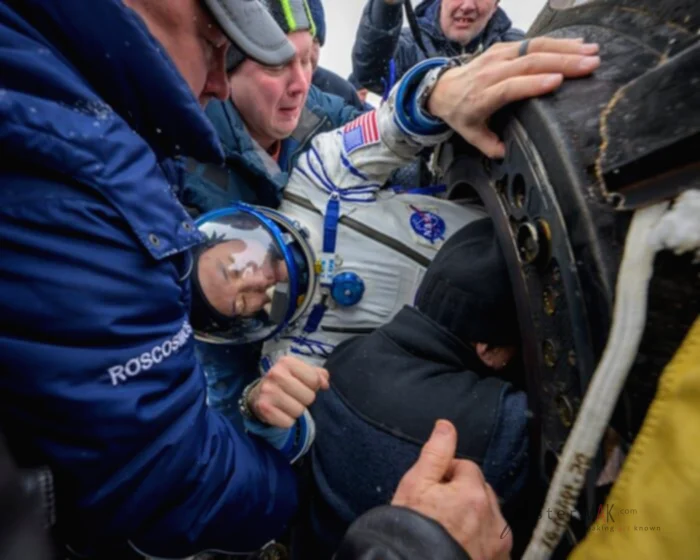
The landing site in Kazakhstan is a familiar location for the recovery of space missions. As the spacecraft parachuted down to the barren landscape, ground recovery teams were on standby to assist the astronauts upon touchdown. The landing was executed flawlessly, with the capsule coming to rest gently on the ground. The returning astronauts were quickly extracted from the capsule and underwent immediate medical evaluations to assess their health after the extended period in microgravity.
The homecoming was marked by a mix of relief and celebration. The astronauts, who spent months living and working in space, were welcomed back by their colleagues and family members. The return is not only a significant milestone for the individuals involved but also for the international collaboration that makes such missions possible. The successful landing is a testament to the dedication and expertise of the teams involved in ensuring the safety and success of the mission.
Scientific Endeavors in Space
During their time aboard the ISS, the astronauts conducted a wide range of scientific experiments and research projects. These endeavors are crucial for advancing our understanding of various phenomena that can only be observed in a microgravity environment. Experiments conducted on the ISS range from biological and physical sciences to advancements in technology and materials science.
One of the key objectives of the mission was to study the effects of prolonged exposure to microgravity on the human body. This research is vital for future long-duration space missions, including potential manned missions to Mars. By understanding how the body adapts to and recovers from time spent in space, scientists can develop strategies to mitigate potential health risks for astronauts. This knowledge is essential for ensuring the safety and well-being of future spacefarers.
Command Change at the ISS
The astronauts’ return to Earth coincides with a significant leadership transition aboard the ISS. A new commander has assumed responsibility for the station’s operations, a routine yet critical aspect of maintaining the continuity of the mission. The command change is a carefully coordinated procedure that involves the transfer of responsibilities and authority to the incoming commander. This transition ensures that the station continues to operate smoothly and that scientific research and maintenance activities proceed without interruption.
The change in command is not only a logistical necessity but also an opportunity for the crew to reflect on their accomplishments and set goals for the future. It highlights the collaborative nature of space exploration, with astronauts from different countries working together to achieve common objectives. The ability to adapt to new leadership and maintain the station’s operations is a testament to the training and professionalism of the crew.
The Significance of Returning to Earth
Astronauts returning to Earth is more than just the end of a mission; it is the culmination of years of planning, training, and international cooperation. The data and experiences brought back by the returning crew will inform future missions and contribute to the growing body of knowledge about living and working in space. The successful completion of this mission underscores the importance of continued investment in space exploration and the benefits it brings to humanity.
The return of the astronauts also serves as an inspiration to future generations of scientists, engineers, and explorers. It demonstrates the possibilities of human ingenuity and the potential for discovery beyond our planet. As the world watches these remarkable achievements, the hope is that they will inspire continued interest and support for the exploration of space.
Challenges and Triumphs of Space Travel
Space travel is fraught with challenges, from the technical complexities of spacecraft design to the physical and psychological demands placed on astronauts. The successful return of astronauts to Earth is a testament to the resilience and determination of those involved in the mission. It is a reminder of the risks inherent in space exploration and the need for constant innovation and vigilance.
The triumph of safely returning the crew to Earth is a cause for celebration and reflection. It highlights the importance of thorough preparation, teamwork, and the ability to adapt to unexpected situations. The lessons learned from each mission contribute to the ongoing improvement of space travel technologies and practices, ensuring that future missions are even safer and more successful.
Looking Ahead: The Future of Space Exploration
As astronauts return to Earth, attention turns to the future of space exploration. The insights gained from this mission will inform the planning and execution of future expeditions, including those to distant planets and beyond. The collaborative efforts of international space agencies continue to push the boundaries of what is possible, paving the way for new discoveries and advancements.
The return of astronauts to Earth symbolizes the resilience of the human spirit and our innate desire to explore and understand the universe. It is a reminder of the incredible achievements that can be realized through cooperation, innovation, and perseverance. As the world celebrates the safe return of these explorers, the focus remains on the next frontier and the limitless possibilities that await.